Our gum line is an important part of our smile. Take a look at your own and you�ll note that there are some dips and rises. Frequently, the spaces between each tooth, from top to bottom, do not appear to be the same. Everyone is unique. And the appearance of their gum lines might make some people feel self-conscious.
These difficulties may be addressed, whether you have a gummy smile or not enough gum tissue to balance the proportions of your teeth. Gum contouring is one of the most popular techniques for people to improve the appearance of their smiles by correcting irregularities in their gum lines. We�ll go over what gum contouring is, why it�s needed, the benefits of laser gum contouring, and much more in this post.
What is laser gum contouring?
Gum contouring and reshaping, also known as gingival sculpting, is a cosmetic dental technique used to improve the appearance of a smile or treat medical problems associated with gum loss. Dentists can use laser gum contouring to enhance the appearance and health of their patient�s smiles.
When is it necessary?
Laser gum contouring is frequently used for aesthetic reasons. However, some people with periodontal disease are advised to do so.
One treatment option for repairing the damage caused by untreated gum disease is laser gum contouring. Dentists are more inclined to attempt anything non-surgical before turning to laser therapy. Antibiotics are used to eliminate bacteria, and dental cleanings are performed to restore health.
There�s a big difference between gum contouring that�s required for cosmetic reasons and gum contouring that�s required for medical reasons. Those who require laser gum contouring to treat a medical condition such as chronic gum disease or gum recession will almost surely be covered by insurance. Insurance companies will usually not cover it for cosmetic reasons.
How does it work?
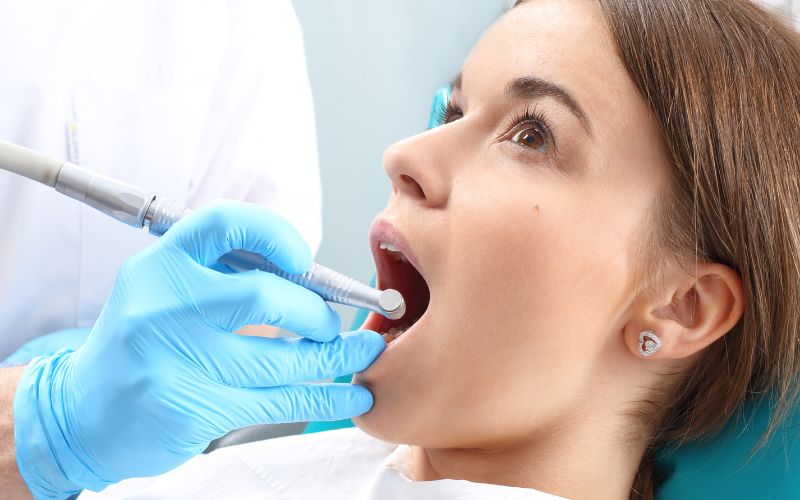
Gum contouring can be done in a single office visit by a periodontist or cosmetic dentist. You won�t need to be unconscious for the operation in most situations. All you�ll need is a topical anesthetic to numb the affected region.
Instead of using a blade, your dentist will use a laser to remove extra gum tissue using laser gum contouring. He or she will next reshape the gum line to show more of the tooth, resulting in a more natural-looking smile. This removes any decaying tissue from the gums, allowing for healthy gums. The gum tissue may or may not be held in place with sutures.
Your dentist will need to add gum tissue after using gum contouring to fix receding gum lines. He or she will take tissue from various parts of your mouth, such as the palate. The gum line will next be lengthened or restructured by the dentist by attaching the tissue surrounding the teeth. Laser gum contouring might take a few hours to complete, depending on whether the operation is performed to cure gum recession or to trim extra gum tissue.
Laser gum contouring has a number of advantages over conventional gum contouring techniques.
The conventional gum contouring procedure involves cutting the gums with a scalpel and closing the incision with stitches. The benefit of laser gum contouring over blade gum contouring is that it does not require sutures and so has a faster recovery period — and it is a pretty painless treatment.
Though the treatment may cause some discomfort, such as soreness and numbness, it is usually considerably more painless for the patient than the traditional scalpel approach.
Those who have had both traditional gum surgery and laser gum contouring agree that laser gum contouring is far less intrusive. This is a good option for uneven gum lines because it requires less downtime, only a few days.
Post-care tips
You might experience some soreness after the operation, which is to be expected. Many dentists will either prescribe a pain reliever or recommend that you take acetaminophen or ibuprofen, which are both over-the-counter pain relievers. They usually advise against taking aspirin since it might cause bleeding, and you should discuss this with your dentist before the operation.
You�ll need to go again to the dentist for follow-up appointments to make sure there�s no infection and that your gums are healing properly. To decrease the chance of infection, you may be given a mouth rinse.
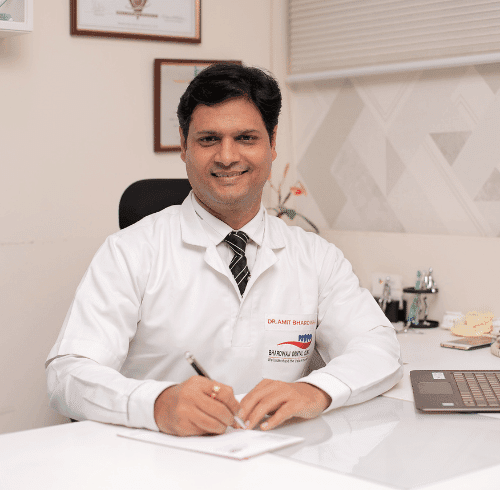
Dr. Amit Bhardwaj
Consulting Orthodontist at Bhardwaj Dental Clinic Indore, dedicated to providing advanced, painless, and aesthetic dental treatments.
 General Dentistry